- Главная
- Блог
- Об авторе
- Подписка на IT блог
-


- v1.1229
Разбираем: Trace, Profiling, Integration Testing, Code Coverage, Mocking, Deadlock Detection в Go vs Java | Testing, Debugging и Profiling
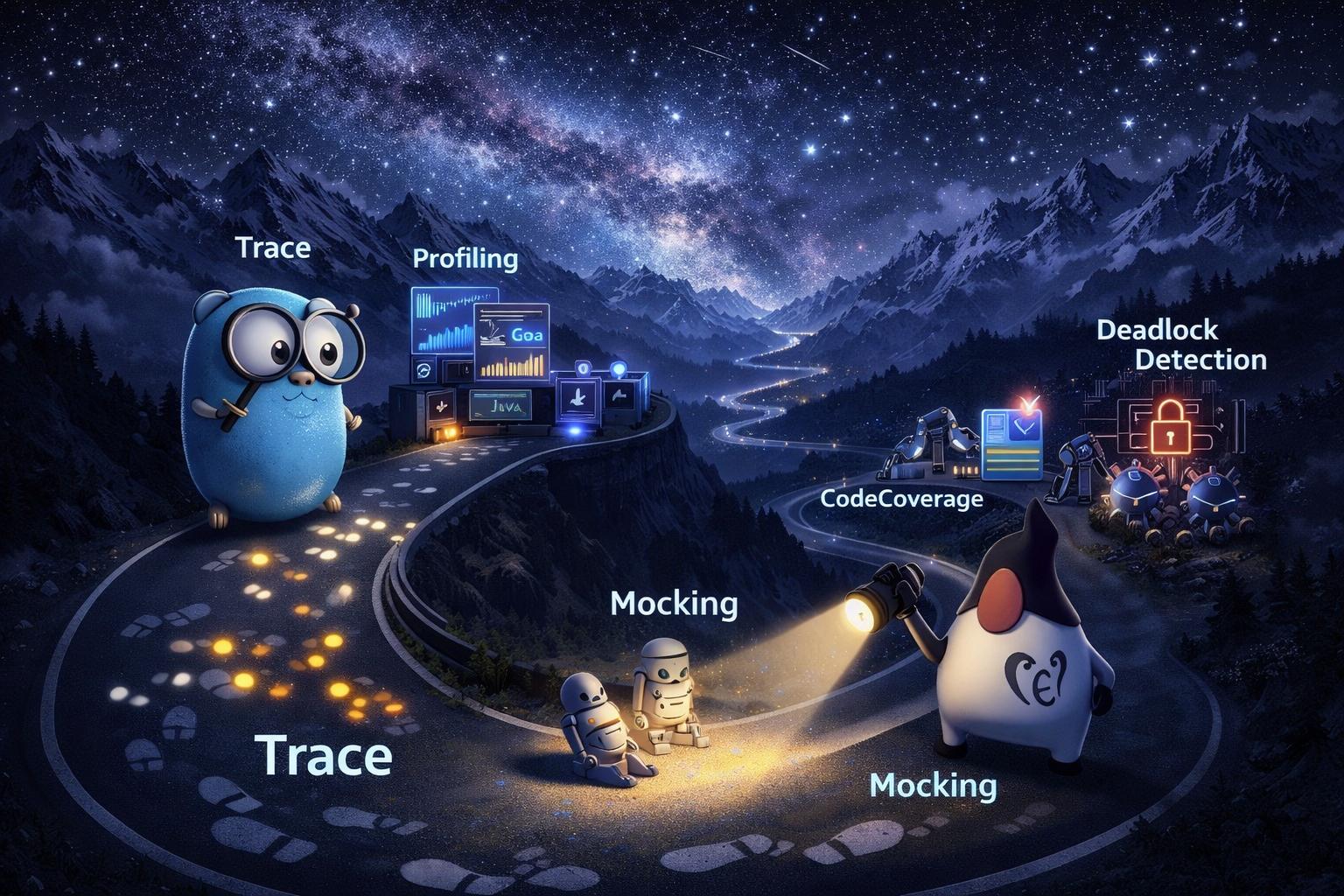
Серия: Go для Java-разработчиков — разбор trace, профилирования и тестирования
В этой статье мы разберем инструменты и практики для тестирования, отладки и профилирования в Go. Для Java-разработчика это позволит легко ориентироваться в Go, а Go-разработчику — сравнить подходы с Java.
Trace — отслеживание выполнения программы
Go имеет встроенный пакет runtime/trace для детального анализа работы программы.
Позволяет отслеживать goroutine, syscalls и время выполнения.
Пример trace
// Go
import (
    "os"
    "runtime/trace"
    "time"
)

func main() {
    f, _ := os.Create("trace.out")
    defer f.Close()
    trace.Start(f)
    defer trace.Stop()

    time.Sleep(time.Second) // пример работы
}
Java эквивалент: через Flight Recorder или профилировщик JVisualVM
// Java (пример записи событий через Flight Recorder API)
import jdk.jfr.Recording;

public class Main {
    public static void main(String[] args) throws Exception {
        try (Recording recording = new Recording()) {
            recording.start();
            Thread.sleep(1000); // пример работы
            recording.stop();
            recording.dump(new java.io.File("trace.jfr").toPath());
        }
    }
}
Trace полезен для глубокого анализа производительности и выявления узких мест, особенно при concurrency.
Profiling CPU и памяти
Go предоставляет пакет pprof для профилирования CPU и памяти.
Это помогает оптимизировать использование ресурсов.
Пример CPU профиля
// Go
import (
    "os"
    "runtime/pprof"
)

func main() {
    f, _ := os.Create("cpu.prof")
    defer f.Close()
    pprof.StartCPUProfile(f)
    defer pprof.StopCPUProfile()

    // нагрузка
    for i := 0; i < 1000000; i++ {}
}
Java эквивалент: профилировщик JVisualVM или Java Flight Recorder
// Java
// CPU и heap профилирование через JVisualVM / Flight Recorder
// Пример кода профилирования вручную в Java не нужен, используется GUI
Совет: профилируйте CPU и память регулярно, особенно при высоких нагрузках и многопоточности.
Integration Testing — интеграционные тесты
Go использует пакет testing для unit и integration тестов.
Java использует JUnit/TestNG. В Go тесты пишутся просто и компонуются через файлы *_test.go.
Пример интеграционного теста
// Go
import "testing"

func TestIntegration(t *testing.T) {
    result := 1 + 2
    if result != 3 {
        t.Error("Expected 3")
    }
}
Java эквивалент:
// Java
import org.junit.jupiter.api.Test;
import static org.junit.jupiter.api.Assertions.*;

class MainTest {
    @Test
    void testIntegration() {
        assertEquals(3, 1 + 2);
    }
}
Code Coverage — покрытие тестами
Go поддерживает анализ покрытия кода через go test -cover.
Java — через JaCoCo или встроенные инструменты IDE.
Пример команды
// Go
go test -cover ./...
Совет: покрытие 80%+ важно для стабильности и уверенности в изменениях кода.
Mocking interfaces — подмена зависимостей
Go позволяет мокать интерфейсы вручную или через сторонние библиотеки (gomock). Java использует Mockito или PowerMock.
Пример Go
// Go
type DB interface {
    Get(id int) string
}

type MockDB struct{}

func (m MockDB) Get(id int) string {
    return "mocked"
}
Java эквивалент:
// Java
import static org.mockito.Mockito.*;

interface DB {
    String get(int id);
}

public class Test {
    public void test() {
        DB mockDb = mock(DB.class);
        when(mockDb.get(1)).thenReturn("mocked");
    }
}
Deadlock detection — обнаружение взаимоблокировок
Go race detector (go run -race) помогает выявлять гонки и deadlock.
Java — thread dump, VisualVM или встроенные инструменты IDE.
// Go
go run -race main.go
Совет: гонки и deadlock — основные проблемы многопоточного кода. Используйте встроенные инструменты для быстрого обнаружения.
Сравнительная таблица Go ↔ Java
| Концепция | Go | Java | Комментарий |
|---|---|---|---|
| Trace | runtime/trace | Flight Recorder / JVisualVM | Детальный анализ выполнения |
| CPU / Memory profiling | pprof | JVisualVM / Flight Recorder | Анализ использования ресурсов |
| Integration testing | testing package, *_test.go | JUnit / TestNG | Простое написание тестов |
| Code coverage | go test -cover | JaCoCo / IDE | Отслеживание покрытия |
| Mocking interfaces | ручное или gomock | Mockito / PowerMock | Подмена зависимостей для тестов |
| Deadlock detection | race detector | thread dump / VisualVM | Выявление гонок и блокировок |
Практический вывод
- Go имеет встроенные инструменты для тестирования, профилирования и отладки — проще интегрировать в pipeline.
- Java предлагает мощные сторонние инструменты и IDE, но требует больше настройки.
- Race detector и pprof — ключевые инструменты для безопасной работы с concurrency.
- Mocking и coverage удобны для поддерживаемого и надежного кода.
- Сравнение подходов Go ↔ Java позволяет быстро адаптироваться между языками и использовать лучшие практики.
Оставить комментарий
Полезные статьи:

Новые статьи: