Application architecture

How to keep a legacy project from dying and give it another 10 years
Signs of a legacy project: how to recognize an old ship A legacy is not just old code. It is a living organism that has survived dozens of changes, team shifts, outdated technologies, and numerous temporary workarounds. It relies on the enthusiasm of engineers, the magical knowledge of "veterans," a...
Modern architectural approaches: from monolith to event-driven systems
Introduction Architecture is more than just a way to arrange classes and modules. It is the language a system uses to communicate time. Today, Java developers live in a world where the boundaries between services, data flows, and events are becoming increasingly thin. "A good architecture doesn t...
Useful Articles:

Introduction Architecture is more than just a way to arrange classes and modules. It is the language a system uses to communicate time. Today, Java developers live in a world where the boundaries bet...
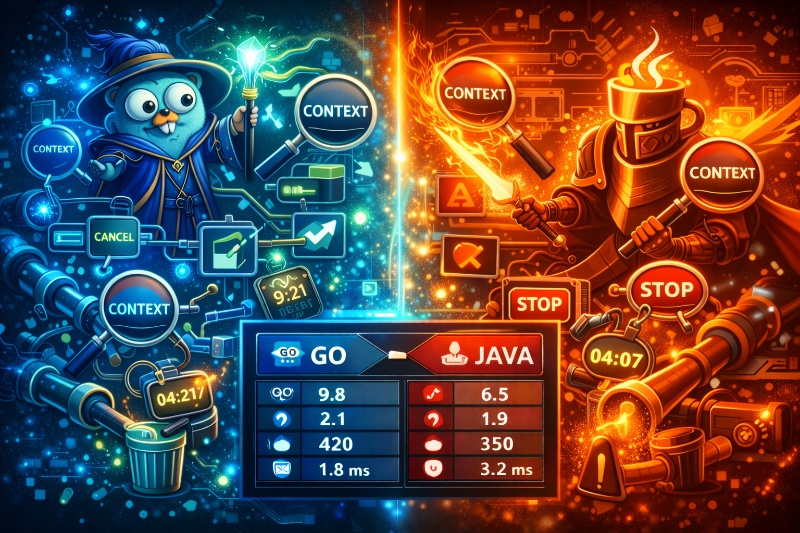
← Related articles: Part 1 — Error handling and defer in Go (Concurrency and synchronization) | Patterns, idioms and best practices for Go 1. Context and its role In Go context.Context is used to...
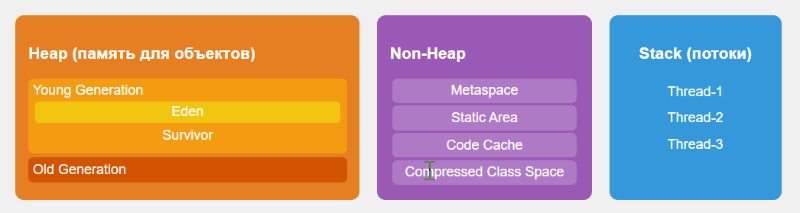
Diagram - Java Memory Model - Heap / Non-Heap / Stack Heap (memory for objects) Creates objects via new. Young Generation: Eden + Survivor. Old Generation: objects that have survived several GC c...
New Articles:
Concurrency is not about “starting many threads”. It’s about agreements between them. Imagine a restaurant kitchen: — cooks (threads / goroutines) — orders (tasks) — and the main question: how do th...

Imagine a typical production service. 32 CPU hundreds of threads configuration / session / rate limits cache tens of thousands of operations per second And somewhere inside — a regular Map. At first...

Zero Allocation — is an approach to writing code in which no unnecessary objects are created in heap memory during runtime. The main idea: fewer objects → less GC → higher stability and performance. ...